 US Dollars

It’s a known fact that indoor air quality has a direct impact on your household’s health, comfort, and overall well-being. From allergens and dust to odors, airborne pathogens, and chemical pollutants, the air inside a home can contain far more contaminents than many homeowners realize.
Modern air purifiers rely on multiple complementary technologies: HEPA filtration, activated carbon, UVC light, and photocatalytic oxidation (PCO). Each one is designed to target specific types of pollutants. Understanding how these technologies work helps homeowners make informed decisions about protecting their indoor environment.
HEPA Filtration: Capturing Airborne Particles
High-Efficiency Particulate Air, or HEPA, filtration is the 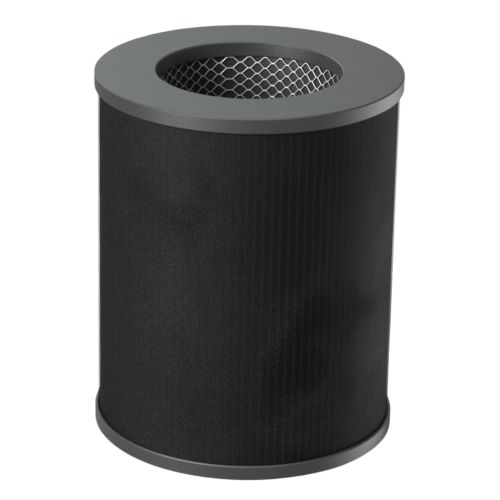 foundation of most high-quality air purifiers. True HEPA filters are designed to capture 99.97% of airborne particles as small as 0.3 microns. These filters target dust and fine matter, pollen, dander, mold spores, and smoke particles, physically trapping them rather than neutralizing them and preventing re-circulation back into the air.
HEPA filtration, now a cornerstone of domestic air purification, originated as a top-secret project during World War I when the British discovered the effectiveness of a special paper in German gas masks for capturing chemical smoke. This innovation evolved through the British Army Chemical Corps' "absolute air filter" and was further developed by the U.S. during the Manhattan Project to protect workers from hazardous radioactive particles, focusing on filtering 0.3-micron particles. Although initially not effective against radiation, HEPA filters provided excellent defense against chemical threats and were used in both military headquarters and gas masks.
After World War II, HEPA technology was adopted commercially, first in vacuum cleaners and then in industries requiring high-efficiency filtration. Its popularity surged with increased public concern for air quality, especially following the Clean Air Act of 1963, leading to widespread use in homes, medical settings, cleanrooms, and more. Today, HEPA filters are recognized as highly efficient solutions for trapping dangerous particulates, with advancements making them more compact and accessible for everyday use.
The Air Health SKYE Portable Air Filter uses medical-grade HEPA filtration technology to remove contaminants and irritants from the air. It has a MERV rating of 13, which means that in addition to its 99.97% 0.3-micron efficiency, the filter captures most particles between 0.1 and 3.0 microns. This is considered the best rating for residential and general office filters.
Activated Carbon: Reducing Odors and Chemical Pollutants
Activated carbon filters are designed to remove gases, 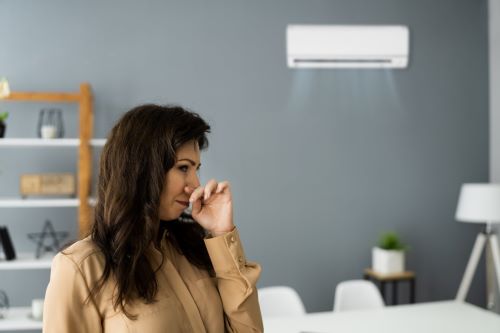 odors, and volatile organic compounds (VOCs) that traditional particle filters cannot capture. This process works through adsorption, binding gases and odors to the carbon surface and preventing them from remaining airborne.
Humans have been using activated carbon for thousands of years. Originally, this material was utilized for water treatment and filtration, and subsequently for sugar bleaching during the 20th century. Its primary function was to remove taste and odor, and it was supplied as a powder until the 1930s. Since World War I, granular activated carbon has been incorporated into gas masks to shield soldiers from battlefield smoke. Later, it was used in replaceable cartridges, allowing for continued protection once the gas adsorption capacity was reached.
Today, carbon filtration is widely used for various purposes, including air purification. There are different kinds of carbon filters, such as Granular Activated Carbon (GAC), Powdered Activated Carbon (PAC), and Activated Carbon Fibers (ACF). Activated Carbon Fibers are generally preferred because their higher surface area makes them more efficient at removing certain air pollutants compared to GAC and PAC.
Carbon filters are relatively easy to install and maintain. Since many carbon filters are simple to replace, you can easily keep your home's air purification system running efficiently.
UVC Light: Neutralizing Microorganisms
Ultraviolet-C (UVC) light targets airborne microorganisms by disrupting their DNA or RNA, preventing them from replicating. Unlike filters that capture particles, UVC technology inactivates biological contaminants, reducing the risk of airborne transmission. This is particularly valuable during cold and flu season or in homes with higher occupancy.
Using UV light for disinfecting purposes has been common since the mid-20th century. Mainly used for medical sanitization and in workplace facilities that require sterile environments, UV light was also used for sterilizing both drinking and wastewater. AirHealth integrates this UV light technology into our air purifiers to effectively reduce bacteria, viruses, and other microorganisms.
One of the benefits of UV lights is that they are low maintenance. Once they’re installed, they require very little attention or upkeep other than replacing the bulb once per year to ensure maximum effectiveness. When properly installed and used according to the manufacturer's instructions, UV light provides a constant stream of UV radiation into the duct system, effectively treating the air.
Photocatalytic Oxidation: Breaking Down Pollutants at the Molecular Level
Photocatalytic oxidation (PCO) technology uses a catalyst (often titanium dioxide) activated by UV light to create reactive molecules that break down pollutants at the molecular level. It doesn’t just trap pollutants like VOCs, odors, and airborne chemicals; it helps convert them into less harmful substances, like carbon dioxide and water vapor.
PCO technology began with NASA scientists figuring out how to remove the buildup of ethylene gas in sealed spacecraft. NASA developed PCO technology to break down ethylene gas into harmless carbon dioxide and water by exposure to ultraviolet light in the presence of a titanium dioxide catalyst. The scientists discovered that the tech both removed the gas and also destroyed all carbon-based impurities in the air, like bad odors, mold, fungus, etc.
When paired with other air purifying technologies, PCO eliminates harmful VOCs that can affect your family’s health. It’s especially useful for addressing chemical-based air quality issues that filtration alone can’t solve. It’s also highly effective at removing odors from indoor air, leaving your home smelling fresher.
Why Multi-Stage Air Purification Matters
No single technology can address every indoor air quality challenge on its own. That’s why advanced air purifiers combine multiple purification stages to deliver more comprehensive protection.
A layered approach allows HEPA filters to capture particles, carbon filters to adsorb gases and odors, and UVC and PCO to neutralize and break down microorganisms and chemical pollutants.
Together, these technologies address both particulate and gaseous contaminants, as well as biological threats, resulting in cleaner, healthier indoor air.
How SKYE Brings These Technologies Together
AirHealth integrates these technologies into thoughtfully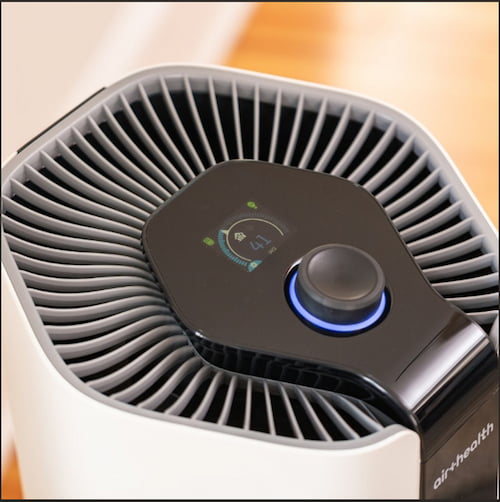 designed air purification systems.
SKYE, AirHealth’s portable air purifier, uses a multi-stage purification process that combines HEPA filtration, activated carbon, and advanced treatment technologies to help address a wide range of indoor air concerns, making it well-suited for bedrooms, offices, living spaces, and other high-use areas of the home.
By bringing multiple technologies into a single system, SKYE supports cleaner air where people spend the most time.
We understand clean indoor air requires more than just moving air through a filter. It requires targeted technologies working together to remove particles, reduce odors, neutralize pathogens, and break down chemical pollutants.
Understanding how HEPA, carbon, UVC, and PCO technologies function and why each plays a role empowers homeowners to choose air purification solutions that align with their health goals and living environments. With the right combination, maintaining healthier indoor air becomes a proactive, long-term investment in comfort and well-being.