 US Dollars

What do you picture when you hear the words "air pollution?" We often picture smog-filled cities, industrial facilities with constantly spewing smokestacks, or wildfire smoke drifting across the sky. However, some of the air pollutants we encounter most frequently are found much closer to home. They're inside the spaces where we live, work, and sleep.
October is National Indoor Air Quality Awareness Month, an opportunity to recognize the importance of the air we breathe indoors and take meaningful steps toward creating healthier living environments.
According to the U.S. Environmental Protection Agency (EPA), Americans spend approximately 90% of their time indoors. During that time, they may be exposed to airborne particles, allergens, biological contaminants, and chemical pollutants from everyday activities.
Fortunately, advancements in air purification technologies, including HEPA filtration, ultraviolet (UV) light, and photocatalytic oxidation (PCO), provide homeowners with options for addressing different indoor air quality (IAQ) challenges.
Understanding how these technologies work is an important first step toward creating cleaner indoor air for you and your family.
Why Indoor Air Quality Deserves More Attention
IAQ refers to the air's condition inside buildings and how airborne contaminants may affect the occupants' health and comfort.
Many homeowners assume that closing their windows and doors protects them from outdoor pollution. However, contaminants can enter through ventilation systems, open doors, and small gaps in the building envelope. Additional pollutants are generated by everyday household activities.
Common sources of indoor air pollution include:
- Dust and Allergens: Household dust, pollen, pet dander, and other particles can remain suspended in the air.
- Cooking: Frying, grilling, and other cooking activities can release fine particles, gases, and odors.
- Cleaning Products: Certain household cleaners release volatile organic compounds (VOCs).
- Furniture and Building Materials: Paints, adhesives, flooring, and furnishings may release chemical pollutants.
- Mold and Moisture: Excess humidity can create conditions favorable to mold growth.
- Outdoor Pollution: Wildfire smoke, vehicle emissions, and other pollutants can enter the home.
Exposure to these contaminants may contribute to respiratory irritation, allergy symptoms, and general discomfort, depending on the pollutants and individual sensitivities.
National Indoor Air Quality Awareness Month is a reminder that cleaner indoor air requires more than occasional dusting or opening a window.
HEPA Filtration: Capturing Airborne Particles
One of the most established technologies for improving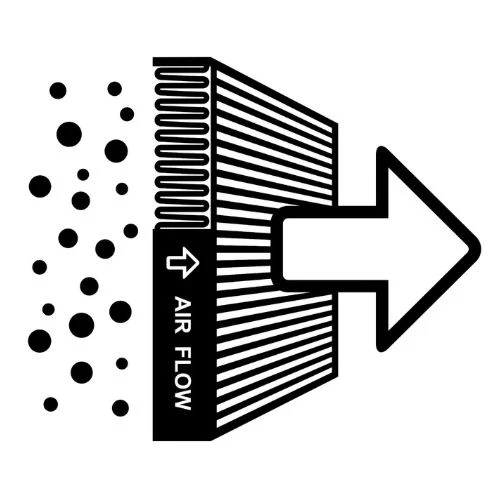 IAQ is High-Efficiency Particulate Air (HEPA) filtration.
HEPA filters are designed to capture at least 99.97% of particles measuring 0.3 microns in diameter under specified testing conditions. Their mechanical filtration structure also captures particles both larger and smaller than this reference size.
As air passes through the filter, airborne particles become trapped within the dense network of fibers.
HEPA filtration can help reduce:
- Household dust
- Pollen
- Pet dander
- Mold spores
- Fine airborne particles
- Smoke particles
For homeowners concerned about seasonal allergies, pets, or everyday airborne dust, HEPA filtration can be a valuable component of an IAQ strategy.
However, HEPA filtration has limitations. While highly effective at capturing particles, it doesn't directly remove most gaseous pollutants or odors.
That's why additional technologies may be useful when addressing a broader range of indoor contaminants.
UV Technology: Targeting Airborne Microorganisms
Ultraviolet light is another technology used in certain air purification systems. Specifically, UV-C light can reduce airborne contaminants by damaging their genetic material.
UV-C technology has been used in applications ranging from water treatment to healthcare environments. In residential air purification systems, it may be used to treat microorganisms as air passes through a designated exposure area.
Depending on the system's design and exposure conditions, UV-C technology can help reduce certain airborne bacteria, viruses, mold spores, and other microorganisms.
The effectiveness depends on several factors, including UV intensity, exposure time, airflow, and the microorganisms being targeted. Unlike HEPA filtration, which physically captures particles, UV-C technology works by reducing susceptible airborne microorganisms.
This distinction is important because UV-C doesn't physically remove dust, pollen, or other particles from the air. When properly designed and combined with effective filtration, UV technology can provide an additional layer of secure air treatment.
PCO Technology: Addressing Gaseous Pollutants and Odors
While HEPA filtration addresses particles and UV-C targets certain microorganisms, another category of indoor pollutants requires attention: gaseous contaminants.
VOCs are gases released by many household materials and activities. Potential sources can include paints, cleaning supplies, new furniture, carpeting and flooring, personal care products, and cooking.
Photocatalytic oxidation (PCO) is an air treatment technology designed to address certain gaseous pollutants through a chemical reaction.
PCO systems typically use UV light to activate a catalyst, often titanium dioxide. This process generates reactive species that can break down certain organic compounds as contaminated air passes through the treatment area.
Unlike traditional particle filtration, which traps pollutants, PCO is intended to chemically transform targeted gaseous contaminants.
However, PCO performance varies significantly depending on the pollutant, catalyst, airflow, and system design. Some systems may produce unwanted chemical byproducts if pollutants aren't fully broken down.
For this reason, homeowners should choose products with appropriate performance and emissions testing rather than assuming all PCO systems perform equally.
Why a Layered Approach to Air Purification Matters
No single air purification technology addresses every indoor air quality concern.
HEPA filtration is highly effective at capturing airborne particles but doesn't directly eliminate gases.
UV-C technology can reduce certain airborne contaminants but doesn't remove dust or allergens.
PCO technology is intended to address selected gaseous contaminants but isn't a substitute for particle filtration.
Combining complementary technologies can provide a more comprehensive approach to indoor air treatment.
A layered strategy may include:
- HEPA filtration: Captures airborne particles such as dust, pollen, pet dander, and fine particulate matter.
- UV-C purification: Provides additional treatment for susceptible airborne microorganisms.
- PCO technology: Targets certain gaseous organic pollutants through photocatalytic reactions.
- Ventilation and source control: Reduce pollutant concentrations by removing contamination sources and introducing clean outdoor air.
Together, these approaches address different aspects of IAQ rather than relying on a single technology to solve every problem.
Simple Ways to Improve IAQ This Month
National Indoor Air Quality Awareness Month is an excellent time to evaluate your home's air quality and make improvements that can benefit your family throughout the year.
Start with these practical steps:
Replace Your Air Filters
Check your HVAC system and portable air purifiers to ensure filters are clean and replaced according to manufacturer recommendations. Dirty filters can reduce airflow and compromise performance.
Control Indoor Humidity
Aim to maintain indoor relative humidity around 30% to 50%, adjusting as appropriate for seasonal conditions. Managing excess moisture helps discourage mold growth and dust mite activity.
Reduce Pollution at the Source
Use kitchen exhaust ventilation while cooking, avoid smoking indoors, minimize unnecessary fragrances, and choose lower-emission household products when possible.
Ventilate When Outdoor Air Quality Is Good
Fresh-air ventilation can help dilute indoor pollutants. However, keep windows closed when outdoor smoke, pollen, or other pollution levels are elevated.
Consider an Air Purifier
A properly sized air purifier can help reduce airborne contaminants in bedrooms, living rooms, home offices, and other frequently occupied spaces.
When selecting a unit, consider room size, clean air delivery rate, filtration technology, noise level, and maintenance requirements.
Discover AirHealth's Air Purification Solutions
Creating cleaner indoor air doesn't have to be complicated.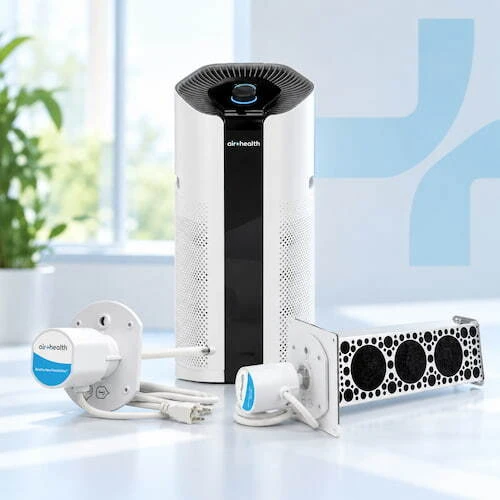
AirHealth offers air purification solutions designed to help homeowners address everyday IAQ concerns, whether they're looking for cleaner air in an individual room or a more comprehensive approach to home air treatment.
Products like Haven, Haven Plus, and Skye provide options for incorporating air purification into everyday life.
Haven:
An option to explore for improving indoor air quality and addressing common airborne contaminants. Haven offers induct air purification with UVC technology.
Haven Plus:
Another solution within the AirHealth lineup for homeowners evaluating their air purification needs. Haven Plus offers induct air purification with UVC, Carbon and PCO.
Skye:
A portable air purification option for spaces such as bedrooms, living rooms, and home offices. Skye offers 5 stages of air purification including UVC, Carbon, HEPA, PCO and large particle filtration.
When comparing these products, consider the specific filtration and purification technologies included in each model, along with room coverage, airflow performance, and maintenance requirements.
Whether your primary concern is airborne dust, allergens, biological contaminants, or household odors, understanding the technologies available can help you select an appropriate solution.
Make Cleaner Air a Priority Beyond October
National Indoor Air Quality Awareness Month is an important reminder that the air inside our homes deserves the same attention as the air outside.
Although indoor pollutants aren't always visible, they can influence comfort and well-being throughout the year.
By understanding the benefits and limitations of HEPA filtration, UV-C technology, and PCO, homeowners can make more informed decisions about improving their indoor environments.
Combined with regular cleaning, proper ventilation, humidity management, and source control, appropriate air purification can help reduce exposure to common indoor contaminants.
This October, take the opportunity to evaluate your home's indoor air quality and discover how AirHealth's Haven, Haven Plus, and Skye can fit into your approach to cleaner air.
Breathing cleaner air shouldn't be a priority for just a certain month. Make it a part of your everyday life.